
A sump pump is one of those home systems you hope you never have to think about. When it is working properly, it quietly moves groundwater out of your sump pit and away from your home. But after a heavy Indiana rain, some homeowners walk downstairs and find water in the basement anyway.
That leads to a common question: “Why is my basement flooding if I already have a sump pump?”
The answer is usually that the sump pump is only one part of the drainage system. If the pump loses power, gets overwhelmed, clogs, or cannot discharge water properly, the basement can still take on water. Here are the most common reasons it happens — and what you can safely check before calling for help.
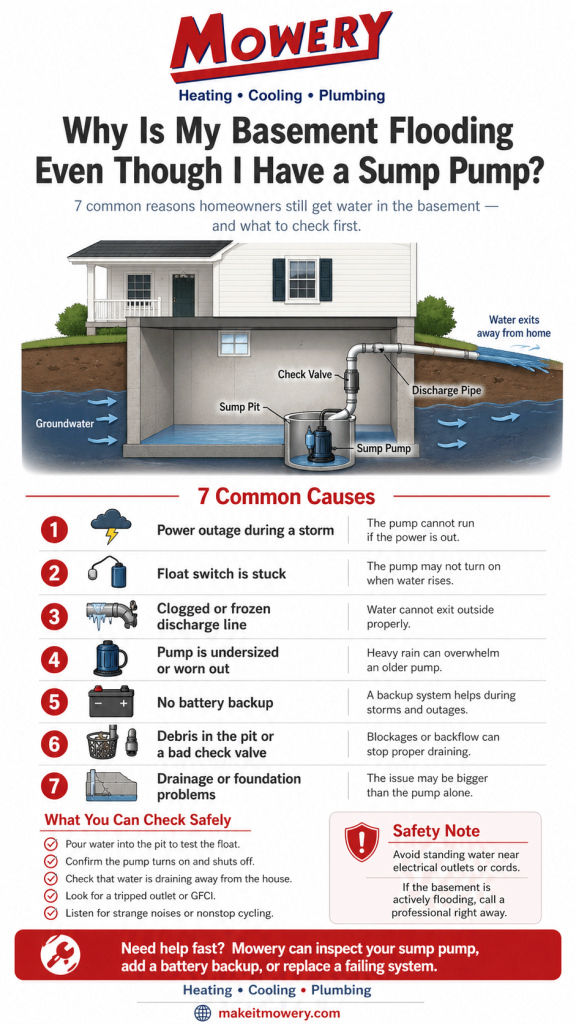
1. The Power Went Out During the Storm
A standard sump pump runs on electricity. Unfortunately, the storms that bring heavy rain can also knock out power. If the power goes out, your sump pump cannot turn on, even if the pit is filling with water.
That is why many homeowners choose to add a battery backup sump pump. A backup system can help keep water moving when the main pump loses power. It is especially helpful for finished basements, homes with frequent water issues, or properties where the sump pump runs often during storms.
2. The Float Switch Is Stuck
The float switch tells the sump pump when to turn on. As water rises in the sump pit, the float rises with it. Once the water reaches a certain level, the pump should start.
If the float gets stuck against the side of the pit, tangled with debris, or jammed in the wrong position, the pump may not activate. In some cases, the pump itself is fine — it just never gets the signal to run.
You can sometimes check this by looking into the pit with a flashlight. Do not reach into standing water near electrical components. If the float looks blocked or the pump is not responding, it is time to have it inspected.
3. The Discharge Line Is Clogged, Frozen, or Blocked
Your sump pump does not make water disappear. It pushes water through a discharge pipe and sends it outside, away from the foundation.
If that discharge line is clogged with debris, frozen, crushed, or draining too close to the house, water may not leave the system properly. In some cases, water can even cycle right back toward the foundation and end up in the sump pit again.
Outside, check where the pipe releases water. It should be clear, open, and directed away from the home. If water is not coming out while the pump is running, the discharge line may be blocked.
4. The Pump Is Too Small or Worn Out
Not all sump pumps are sized for the same amount of water. During a strong storm, an older or undersized pump may run constantly and still fail to keep up.
A pump that is nearing the end of its life may also become weaker over time. Warning signs include loud noises, frequent cycling, vibration, rust, or a pump that seems to run but does not move much water.
If your sump pump runs nonstop during rain, that is worth paying attention to. It may need repair, replacement, or a backup system to handle heavier water flow.
5. There Is No Battery Backup
A battery backup is not just for power outages. It can also help if your main pump fails during a storm. Without a backup, one mechanical problem can quickly turn into a wet basement.
A backup system gives homeowners an extra layer of protection. It is especially useful in Central Indiana, where spring and summer storms can bring heavy rainfall in a short amount of time.
6. There Is Debris in the Pit or a Bad Check Valve
The sump pit can collect dirt, small stones, sediment, and other debris. Over time, that buildup can interfere with the pump, float switch, or intake.
Another small but important part is the check valve. This valve helps stop water from flowing back into the pit after the pump shuts off. If the check valve is missing, stuck, or failing, water can drain back into the pit and cause the pump to cycle more than it should.
7. The Problem Is Bigger Than the Sump Pump
Sometimes the sump pump is doing its job, but the home has a larger drainage or foundation issue. Poor grading, clogged gutters, short downspouts, foundation cracks, or saturated soil can all send too much water toward the basement.
A sump pump helps remove water that reaches the pit. It does not fix every source of water around the foundation.
What You Can Check Safely
Before calling a professional, homeowners can do a few simple checks:
Make sure the outlet has power and the GFCI has not tripped. Look into the pit to see if the float moves freely. Pour water into the pit to see whether the pump turns on and shuts off. Check outside to confirm water is discharging away from the home. Listen for grinding, humming, or nonstop cycling.
Avoid standing water near electrical cords, outlets, or the sump pump itself. If the basement is actively flooding, call a professional right away.
Need Help With a Sump Pump Problem?
If your basement is flooding even though you have a sump pump, the issue may be simple — or it may be a sign your system needs repair, replacement, or a battery backup.
Mowery Heating, Cooling & Plumbing can inspect your sump pump, check the discharge line, test the float switch, and help you decide whether a backup system makes sense for your home. For Central Indiana homeowners, a little prevention before the next storm can save a lot of cleanup later.


