
When fall rains hit hard in Indiana, your sump pump becomes the unsung hero of your basement. At Mowery Heating, Cooling & Plumbing, we often get calls from homeowners discovering the hard way that their sump pump failed—usually during the first big downpour. The good news? A quick preseason test and some basic maintenance can keep your system running reliably and extend its lifespan.
Here’s everything you need to know—broken down in the practical, hands-on spirit of This Old House—to test, service, and stay ahead of sump pump surprises.
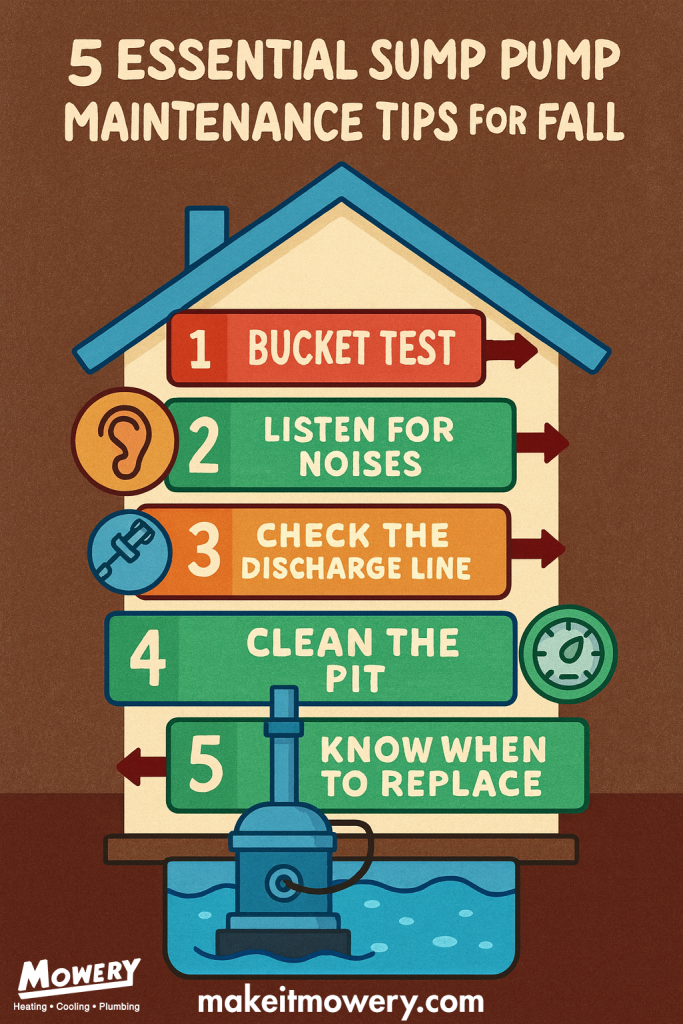
Why Fall is the Time to Act
Most homeowners assume that sump pumps only matter in the spring. But in Indiana, fall rainstorms, leaf blockages, and changing temperatures can all conspire to create serious basement water issues. Worse, a neglected pump can silently fail and only reveal the problem when it’s too late.
Prepping now ensures your system is ready for:
- Heavy fall rainfall
- Clogged drain tiles or outdoor discharge lines
- Power outages or mechanical failures
A failed sump pump during a storm is more than inconvenient—it can lead to thousands in water damage.
Step 1: The Bucket Test
This is your simplest line of defense. All you need is a bucket of water and a few minutes.
- Uncover the pit and inspect for obvious debris or foul smells.
- Slowly pour water into the sump basin—enough to raise the float.
- The pump should activate quickly, drain the water, then shut off.
No action? That’s a red flag. Your float may be stuck, the switch could be faulty, or the motor might have failed.
Step 2: Listen to Your Pump
Even if your pump turns on, listen carefully. Grinding, humming, or rattling noises could signal:
- Worn bearings
- A clogged impeller
- Loose mounting or vibration issues
Your pump should sound like a steady hum—not a struggling lawnmower. If anything sounds off, it’s worth having it inspected by a pro.
Step 3: Inspect the Discharge Line
This is the number one oversight we see during fall maintenance.
Make sure the discharge pipe:
- Exits at least 6–10 feet from your foundation
- Has a clean, unobstructed outlet
- Includes a check valve to prevent backflow
Leaves, mud, and critters love to block these pipes in the fall. Use a hose to test water flow if needed.
Step 4: Clean the Pit
Turn off power at the breaker and unplug the pump. Carefully lift it from the basin.
- Remove dirt, sludge, or debris from the pit.
- Rinse the pump and impeller.
- Check the float mechanism for free movement.
This is also a great time to inspect your backup battery system (if installed) and test alarms.
Step 5: Know When to Replace
If your pump is over 7–10 years old, even a working unit might not be trustworthy in a storm. Some signs you may need a new one:
- Frequent on/off cycles
- Strange noises
- Rising water before activation
- Rust or corrosion on housing or parts
Replacing before failure is always cheaper than emergency remediation after flooding.
Bonus: Add a Backup System
Ask any plumber—your sump pump only fails when you need it most. If your home is in a high-risk area or you’ve had issues before, consider:
- A battery backup that kicks in during power outages
- A water-powered backup that runs off your municipal supply
These backups are lifesavers during extended storms and power failures.
Common Questions From Homeowners
“How often should I test my sump pump?”
At least once per season—fall and spring are musts.
“Should I leave my sump pump plugged in all the time?”
Yes. Only unplug it when cleaning or testing.
“Why does my sump pump smell?”
Stagnant water or bacteria buildup. Clean the pit and flush with a bleach solution.
Google’s Most Searched Sump Pump Concerns
According to Google, homeowners are asking:
If any of those questions sound familiar, you’re not alone—and you’re not behind. Fall is the perfect time to get ahead of trouble with a proactive checkup.
Need Help? Call Mowery.
If you’re unsure whether your sump pump’s ready—or you’d rather have a pro check it for peace of mind—Mowery is here for you. Our certified plumbers can test, clean, and service your entire system quickly and affordably.
We’re your trusted local team for over 50 years—based right here in Indianapolis and proud to help you stay dry and stress-free this season.


