
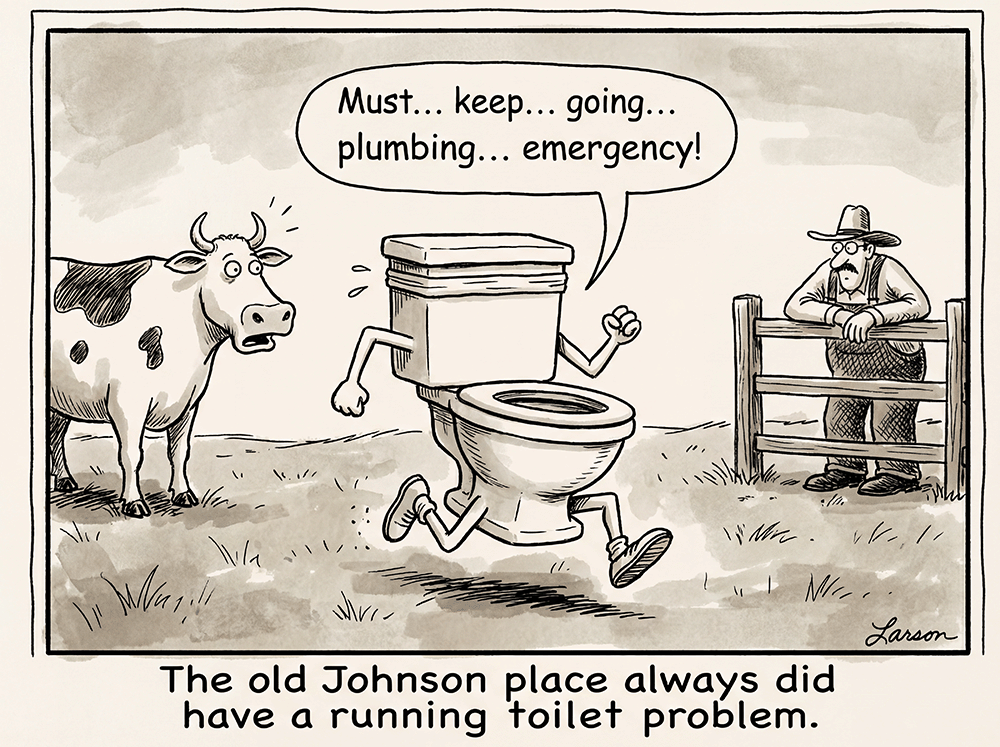
There’s a certain sound every homeowner knows—the quiet, steady trickle of a toilet that just won’t stop running.
It’s easy to ignore at first. Maybe you jiggle the handle. Maybe it stops… until the next flush.
But that small, familiar sound is usually your plumbing’s way of saying: something’s wearing out.
The good news? In most cases, it’s a simple fix. And understanding what’s happening inside the tank can save you water, money, and a bigger repair down the road.
🔍 What’s Actually Happening Inside the Tank
Lift the lid off your toilet tank, and you’ll find a handful of simple parts working together—nothing complicated, but each one has a job to do.
When a toilet keeps running, it usually means one of these parts isn’t doing its job quite right anymore.
The Flapper: A Small Part That Does a Big Job
At the bottom of the tank sits a rubber flapper. When you flush, it lifts to let water rush into the bowl, then settles back down to seal everything off.
Over time, that rubber can:
- Stiffen
- Warp
- Or develop small cracks
When it no longer seals tightly, water slowly leaks through—causing the tank to refill again and again.
It’s one of the most common (and most overlooked) causes of a running toilet.
The Chain: Simple, but Easy to Misadjust
The chain connects your flush handle to the flapper.
If it’s too tight, the flapper can’t fully close.
If it’s too loose, it can slip underneath and hold the seal open.
It’s a small detail, but it makes all the difference.
The Fill Valve: Keeping Things in Balance
The fill valve controls how much water returns to the tank after each flush.
When it starts to wear out, you might notice:
- A constant hissing sound
- Water that never quite stops running
- Or a tank that struggles to settle
The Water Level: A Subtle but Common Issue
Inside the tank, there’s an overflow tube designed to prevent flooding.
If the water level is set just a bit too high, it will continuously spill into that tube—creating an endless refill cycle.
🛠️ A Few Things You Can Try
If you’re comfortable taking a look inside the tank, a few small adjustments can often solve the problem:
- Check that the flapper is sitting flat and sealing properly
- Make sure the chain has a little slack—not too tight, not too loose
- Adjust the float to lower the water level slightly
- Consider replacing the flapper—it’s inexpensive and often all it takes
💧 Why It’s Worth Fixing Sooner Than Later
A running toilet isn’t just a nuisance—it’s surprisingly wasteful.
That steady trickle can add up to hundreds of gallons of water a day, often without you realizing it.
Catching it early keeps your water bill in check and helps avoid added wear on the rest of your plumbing system.
🚨 When It’s Time to Call in a Pro
Sometimes, what seems like a simple issue keeps coming back—or points to something deeper.
It’s worth calling Mowery if:
- You’ve made adjustments but the running continues
- The toilet is older and parts are wearing out across the board
- You’re hearing constant refilling or inconsistent flushing
- You’d rather have it fixed quickly and correctly the first time
📍 A Quick Fix, Done Right
At Mowery Heating, Cooling & Plumbing, we’ve seen just about every version of a “running toilet” there is.
Sometimes it’s a five-minute adjustment. Sometimes it’s time for new parts. Either way, we’ll walk you through what’s going on and get it handled without the guesswork.
If that quiet trickle has been lingering a little too long, give us a call—we’re here to help.


